Fuel Management
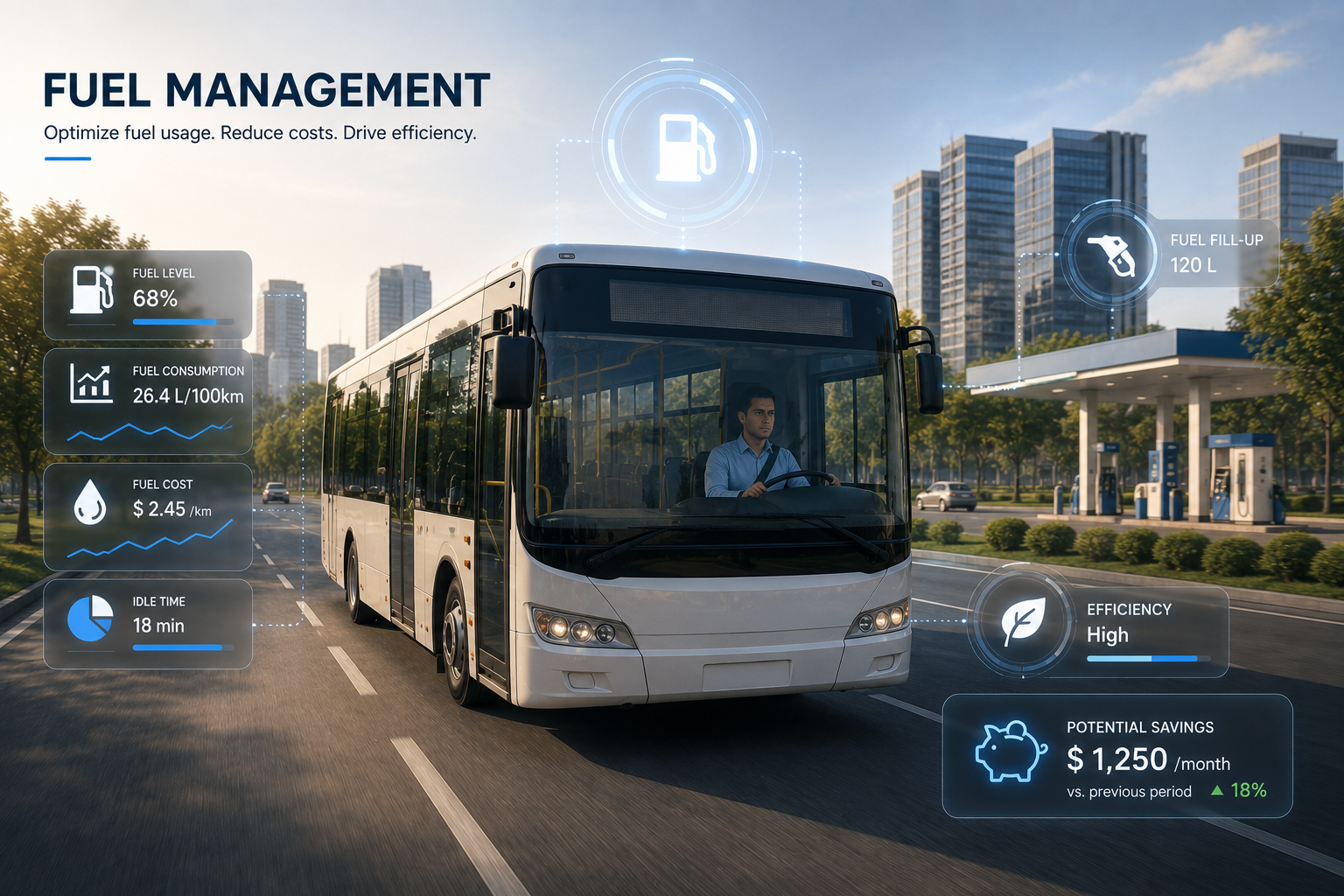
Overview
Fuel Management gives you two ways to keep fuel data accurate: manual Fuel Logs for every fill-up, and an automatic Fuel Report that reads your vehicles' fuel level sensors to detect fills and drains on its own — no data entry required once a sensor is calibrated.
Key Features
Fuel Logs
Record every fill-up by hand, per vehicle:
- Date, odometer reading, fuel type, and volume added
- Fuel card number and who filled the tank
- Optional seal numbers and comments for audit trail
- Filterable and searchable per vehicle, exportable to Excel
Automatic Fuel Report
For vehicles with a calibrated fuel level sensor (including wireless capacitive sensors like the Escort TD-BLE), the Fuel Report analyzes sensor readings over time to detect events automatically:
- Fills and Drains — every detected refuel or unexpected loss, with before/after fuel levels, location, and an interactive chart of the sensor curve around the event
- Summary and Detailed breakdowns of fuel balance and consumption by vehicle and by day
- Vehicles without a configured sensor still show mileage and engine-hour data, with the gap explained in the report's Note tab
Anomaly Detection & Alerts
Unexpected fuel level drops (possible theft or leaks) and fills are flagged automatically and can trigger Notification rules — in-app, email, or a map popup — so you find out the same day, not at month-end reconciliation.
Reporting & Scheduling
Export the full report to Excel, or schedule it to run automatically and land in your inbox on a recurring basis.
Benefits
- Catch Fuel Loss Fast: Drain detection surfaces theft or leaks within minutes, not at the next audit
- Less Manual Entry: Sensor-equipped vehicles populate their own fuel history
- Per-Vehicle Accountability: Every fill-up is tied to a vehicle, a person, and a location
- Audit-Ready Records: Exportable logs and reports for compliance and reconciliation
Why NexaBus Fuel Management
Fuel is one of the largest line items in any fleet budget. NexaBus combines simple manual logging with sensor-driven automatic detection, so you always have an accurate fuel picture — whether or not every vehicle is instrumented yet.